












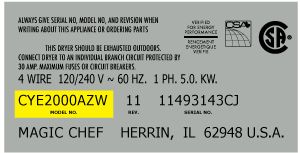


LW8263W2 (PLW8263W2B) Amana Washer - Instructions
Keep searches simple. Use keywords, e.g. "leaking", "pump", "broken" or "fit".
Frayed V-belt
VERY EASY!!!
SAFETY FIRST-Always unplug the appliance.
Use 8mm socket to remove front panel screws. Loosened up two hose clamps connected to the pump and removed both lines (Hoses contain water, use a towel) which is located underneath the motor. Disconnect motor electrical connector on the left side of the motor. With socket, remove 4 mounting bracket screws that secure the motor and pump assembly. Pull back the tension/idler pulley to loosen belt off the main pulley to the washer drum. Tilt and pull out motor/pump assembly. Underneath the pump, use star-bit to remove the pump from motor assembly to remove the belt. Install new belt on motor pulley (Good time to check for debris or anything restricing free movement of pump) and re-install pump. Install the motor/pump assembly and loosely secure the motor/pump assembly. Place the belt onto the motor pulley and pull back the tensioner/idler pulley to allow slack of belt to be placed on washer drum pulley. Put the belt on the lip of the drum pulley and rotate while pulling back the tensioner/idler pulley until the belt is seated on the groove of the drum pulley. Tighten the motor/pump assembley. Re-attach the 2 hoses and tighten down the clamps. Re-connect the electrical connector to the motor...Don't forget to plug in the washer and secure the front panel...Piece 'O cake, you're done! About 15 minutes to do the job. Much like changing a belt on most vehicles.
SAFETY FIRST-Always unplug the appliance.
Use 8mm socket to remove front panel screws. Loosened up two hose clamps connected to the pump and removed both lines (Hoses contain water, use a towel) which is located underneath the motor. Disconnect motor electrical connector on the left side of the motor. With socket, remove 4 mounting bracket screws that secure the motor and pump assembly. Pull back the tension/idler pulley to loosen belt off the main pulley to the washer drum. Tilt and pull out motor/pump assembly. Underneath the pump, use star-bit to remove the pump from motor assembly to remove the belt. Install new belt on motor pulley (Good time to check for debris or anything restricing free movement of pump) and re-install pump. Install the motor/pump assembly and loosely secure the motor/pump assembly. Place the belt onto the motor pulley and pull back the tensioner/idler pulley to allow slack of belt to be placed on washer drum pulley. Put the belt on the lip of the drum pulley and rotate while pulling back the tensioner/idler pulley until the belt is seated on the groove of the drum pulley. Tighten the motor/pump assembley. Re-attach the 2 hoses and tighten down the clamps. Re-connect the electrical connector to the motor...Don't forget to plug in the washer and secure the front panel...Piece 'O cake, you're done! About 15 minutes to do the job. Much like changing a belt on most vehicles.
Parts Used:
-
John from Milton, PA
-
Difficulty Level:Really Easy
-
Total Repair Time:15 - 30 mins
-
Tools:Nutdriver, Screw drivers
63 of 70 people
found this instruction helpful.
Was this instruction helpful to you?
Thank you for voting!
Water leaking on floor from "mysterious place underneath washer"
Water was leaking on the floor during the wash cycle and especially during draining of the washer. I removed the front panel at ground level and watched while draining after a rinse.
I t was obvious that water was spraying from a hole in the rubber end of the hose (the hose is a fused assembly of a plastic section and a rubber section).
So, I finished draining, removed the hose (required pliers to squeeze off a hose clamp).
Upon inspecting the hose, it was also apparent that the hole was caused by rubbing against a support bracket for the motor. This should not happen, but it did because the plastic standoff supposed to keep the hose away from the bracket was installed 180 degrees backwards.
So, I simply replaced the hose and turned the bracket around to the correct orientation.
Everything worked as planned and my repair cost was much less than if I had called someone out.
I t was obvious that water was spraying from a hole in the rubber end of the hose (the hose is a fused assembly of a plastic section and a rubber section).
So, I finished draining, removed the hose (required pliers to squeeze off a hose clamp).
Upon inspecting the hose, it was also apparent that the hole was caused by rubbing against a support bracket for the motor. This should not happen, but it did because the plastic standoff supposed to keep the hose away from the bracket was installed 180 degrees backwards.
So, I simply replaced the hose and turned the bracket around to the correct orientation.
Everything worked as planned and my repair cost was much less than if I had called someone out.
Parts Used:
-
Bryan from Chicago, IL
-
Difficulty Level:Easy
-
Total Repair Time:Less than 15 mins
-
Tools:Pliers, Socket set
51 of 57 people
found this instruction helpful.
Was this instruction helpful to you?
Thank you for voting!
Bearing went out causing lots of noise.
This is not a bad repair, but give yourself some time. I did not have to take the tranny and motor out, but the inner and outer tub and all related parts had to come out, along with the outer tub base. If you are replacing the tub bearing, you HAVE to order the seal kit. Don't try to skimp like I did, since you will need the seal kit as this is what causes that bearing to fail in the first place. We forgot how quiet the washer was after I fixed it, and it saved us from buying a new washer since we were ready to say the heck with it and buy a new pair. You might need an 1.5 inch socket to get the big nut off the spindle, but I was able to get with a visegrip and hammer. The nice thing about this repair is even if you screw it up, you won't have water all over the place because of the seal design. I just checked under the washer a few times for the first few weeks and all seems fine.
Parts Used:

-
mike from hull, IA
-
Difficulty Level:A Bit Difficult
-
Total Repair Time:More than 2 hours
-
Tools:Nutdriver, Pliers, Screw drivers, Socket set, Wrench (Adjustable), Wrench set
24 of 26 people
found this instruction helpful.
Was this instruction helpful to you?
Thank you for voting!
Washer wouldn't drain
I was doing laundry one day, and noticed that the washer did not drain. I drained the water via a shop vac and checked the hoses. There was a baby sock stuck in the hose leading to the pump! I cleared the jam and the washer finally drained again. Once I ran another load, the washer wouldn't drain. I repeated the procedure, and found that the motor was spinning but the pump was not working. I disconnected the machine and proceded to remove the pump. I found that, due to blockage, the motor had reamed out the housing that turns the pump. So, at the advice of my father, who has used this site for other repairs, I entered the model make and number. I was able to view an exploded schematic of the washer in order to correctly identify the part I needed. I found the part, ordered it, and it came to me in about 2 days. I replaced the pump, and my washer has worked great ever since. Thank you PartSelect.com.
Parts Used:

-
William from Fayetteville, NC
-
Difficulty Level:Really Easy
-
Total Repair Time:15 - 30 mins
-
Tools:Nutdriver, Pliers, Socket set, Wrench (Adjustable), Wrench set
20 of 20 people
found this instruction helpful.
Was this instruction helpful to you?
Thank you for voting!
Machine stopped in spin cycle and smell of burnt plastic.
Removed pump/motor assembly. Had a difficult time removing pump from motor. Was not aware that the shaft was not connected some way! After looking over the internet for help....I finally realized that the shaft was siezed in the pump. After much persuasion on my part....it broke loose... I did use some WD-40....but don't know if it....or my prying between the pulley and the pump finally did the trick. Found that the idler pulley was seized. When I replaces both belt and pulley... It worked fine...
Parts Used:
-
Tim from Cumming, GA
-
Difficulty Level:A Bit Difficult
-
Total Repair Time:30 - 60 mins
-
Tools:Nutdriver, Pliers, Screw drivers, Socket set
15 of 17 people
found this instruction helpful.
Was this instruction helpful to you?
Thank you for voting!
Water was leaking from the bottom of the machine, tub wasn't filling
This was on a machine at a friends house I was watching while he was away. I spent more time looking for tools than the actual repair. Once I figured out how to get the front panel off (two bolts at the bottom of the front panel) the problem was easy to diagnose, water was running out of the pump seal. When the parts arrived the repair took about 15 minutes. Shut offpower. remove the 2 bolts holding the plastic cover over the wiring harness, remove the cover and unplug the wiring harness. Losen up the clamps on the hoses to the pump. Place a towel or drip pan under the pump when you pull the hoses lose. Next remove the four bolts at the base of the motor/pump mount. Slip the belt below the bottom of the tub pulley and remove the motor/pump assembly. Remember the position of the idler/tensioner pulley in relation to the belt. Pull the pump off the shaft by removing the three torx head screws holding the pump to the bracket and replace. Reverse the procedure to reassemble. It is a good idea to replace the belt when replacing the pump, the one in the machine I was repairing was cracked and dry, on its last lap. Good luck.
Parts Used:
-
Charles from Cliff, NM
-
Difficulty Level:Easy
-
Total Repair Time:15 - 30 mins
-
Tools:Nutdriver, Screw drivers, Wrench set
14 of 16 people
found this instruction helpful.
Was this instruction helpful to you?
Thank you for voting!
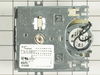
Timer knob wouldn"t turn timer
I removed the six screws that held the control panel to the washing machine and then tried to unscrew the timer knob counter-clockwise to remove it,but it turned freely and wouldn"t unscrew as it should because it was broken inside. I laid the control panel down and used a hammer and a punch and with a few good taps on the metal shaft that was on the inside of the timer (hitting back towards the timer knob) it let go and then the knob turned off easily. I then slid the timer knob plate off the shaft. I removed the two 1/4" nut screws from the timer unit with a nut driver. Next I unplugged the electrical plug by lifting the tab on the top and pulled the connection apart. I put the new timer in with the two nut screwsand plugged in the electrical connection. I then slid on the timer knob plate and screwed the knob on. The control panel was put back on with the six screws and the machine worked perfect. Something that you must not forget......unplug all appliances before working on them.
Parts Used:
-
Gary from Haverhill, NH
-
Difficulty Level:Really Easy
-
Total Repair Time:15 - 30 mins
-
Tools:Nutdriver, Screw drivers
14 of 17 people
found this instruction helpful.
Was this instruction helpful to you?
Thank you for voting!
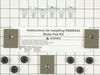
Brake pads were worn out
Unplug the washer
Took off the front with nut driver to two fasteners at the bottom.
Took off two tub springs using channel lock pliers.
Tipped the tub back for more hand room.
Took brake bolts off with box end wrench.
Put Screw driver above brake clamps and pried down to make the old brake pads drop down below the seats and then take brakes off. You might have to use a screw driver to expand the brake clamps so they will release the brake. (brake clamps look like a pulley but the edges will spread some bit.)
Twisted large screw driver between the brake clamps and pushed new brake in as far as would go while beside (to the left or right of) the brake seat.
Pried brake clamps down and rotated brake around until it is lined up with the brake seat. Then pried pads up into the seat.
Re-twisted large screw driver between the brake clamps to separate them and pulled the brake pad back to within 1/8th to 1/16th inch of the back. This lined up the bolt hole.
Inserted the bolt with rubber grommett into the brake pad hole and twisted it counter clockwise and tightened with wrench. (If the bolt would not thread, then you have to adjust the brake pad forward or backward until the holes line up.) Tighten the bolt until it is firmly tight.
There are three brakes. Each is installed the same way. The one in back required a little cross legged contortion for me to reach around both sides of the motor and two front brake pad mounts. The key is lining up the bolt hole in the brake pad with the mount. I pretty well had it figured out after the second pad install. Time for me.. 4 hours. Cost, leg cramps, sore muscles from awkward positions, and the joy of not having to buy a new washer.
Return the springs to the tub on the front. Close front panel and return the two fasteners with the nut drivers.
How did I know I needed the brakes? When in agitation mode the tub spun the opposite direction of the spin cycle. When the agitator turned the opposite direction, the water inside went into a very strong vortex and sometimes sloshed out the top or around the top edges When there were a lot of clothes and a high fill level in the tub. We also had trouble with straps winding around the agitator. The tub spun so quickly that the water without agitation was driven to the top outer edges of the tub by centrifugal force.
Took off the front with nut driver to two fasteners at the bottom.
Took off two tub springs using channel lock pliers.
Tipped the tub back for more hand room.
Took brake bolts off with box end wrench.
Put Screw driver above brake clamps and pried down to make the old brake pads drop down below the seats and then take brakes off. You might have to use a screw driver to expand the brake clamps so they will release the brake. (brake clamps look like a pulley but the edges will spread some bit.)
Twisted large screw driver between the brake clamps and pushed new brake in as far as would go while beside (to the left or right of) the brake seat.
Pried brake clamps down and rotated brake around until it is lined up with the brake seat. Then pried pads up into the seat.
Re-twisted large screw driver between the brake clamps to separate them and pulled the brake pad back to within 1/8th to 1/16th inch of the back. This lined up the bolt hole.
Inserted the bolt with rubber grommett into the brake pad hole and twisted it counter clockwise and tightened with wrench. (If the bolt would not thread, then you have to adjust the brake pad forward or backward until the holes line up.) Tighten the bolt until it is firmly tight.
There are three brakes. Each is installed the same way. The one in back required a little cross legged contortion for me to reach around both sides of the motor and two front brake pad mounts. The key is lining up the bolt hole in the brake pad with the mount. I pretty well had it figured out after the second pad install. Time for me.. 4 hours. Cost, leg cramps, sore muscles from awkward positions, and the joy of not having to buy a new washer.
Return the springs to the tub on the front. Close front panel and return the two fasteners with the nut drivers.
How did I know I needed the brakes? When in agitation mode the tub spun the opposite direction of the spin cycle. When the agitator turned the opposite direction, the water inside went into a very strong vortex and sometimes sloshed out the top or around the top edges When there were a lot of clothes and a high fill level in the tub. We also had trouble with straps winding around the agitator. The tub spun so quickly that the water without agitation was driven to the top outer edges of the tub by centrifugal force.
Parts Used:
-
Stephen from Kittanning, PA
-
Difficulty Level:Difficult
-
Total Repair Time:More than 2 hours
-
Tools:Nutdriver, Pliers, Screw drivers, Wrench set
12 of 13 people
found this instruction helpful.
Was this instruction helpful to you?
Thank you for voting!
Leaking pump, torn belt, washer 24 yrs old
Please read the comments from other people before you start the repair. The hints are great, and save you time.
Removing the old pump from the shaft with two screwdrivers
by gently prying it off the shaft was the best idea. Once the pump is removed from the motor, it is a snap to replace the belt, and tension pulley if necessary.
The metal surfaces are sharp inside the machine, and I suggest placing a good light inside the machine so that you can see where the belt goes. Follow Joseph's instructions from Goldsboro NC to a tee, and your repair will be a great experience.
Peter
Westport, Ma
Removing the old pump from the shaft with two screwdrivers
by gently prying it off the shaft was the best idea. Once the pump is removed from the motor, it is a snap to replace the belt, and tension pulley if necessary.
The metal surfaces are sharp inside the machine, and I suggest placing a good light inside the machine so that you can see where the belt goes. Follow Joseph's instructions from Goldsboro NC to a tee, and your repair will be a great experience.
Peter
Westport, Ma
Parts Used:
-
Peter from Westport, MA
-
Difficulty Level:Easy
-
Total Repair Time:30 - 60 mins
-
Tools:Nutdriver, Screw drivers
11 of 12 people
found this instruction helpful.
Was this instruction helpful to you?
Thank you for voting!
Seal on water pump was leaking
Unplug the washer to prevent shock while handling motor. Remove the front botton access panel. Move the drive belt off the idler pulley to provide slack to move belt off the other pulleys. Note position or take picture of belt position before removal to aid in getting it in the correct position for reinstallation. Move the hose clamps up the hoses far enough to remove the hoses from the pump. A towel is handy here as there is still a little water in the hoses and pump. Remove the four bolts holding the motor bracket to the bottom of the washer. The wiring to the motor does not need to be disconnected. Rotate the bracket with motor and pump attached so that the assembly is horizontal and the pump is to the right hand side. Use the torx bit to remove the bolts holding the pump in place. Install the new pump, being careful to get the drive belt in the proper position while doing so. Do not over tighten the bolts on the new pump since it is plastic. Rotate the motor bracket back to its original position and install the four bolts. Get all four bolts installed loosely before tightening any fully to insure the bracket is aligned properly and none of the bolts will be in a bind. Once the bolts are tight, put the drive belt on the small pulley and then work in around to position on the large pulley. Position the belt back into its position on the idler pulley. Put the hoses on the pump as far as they will go then slide the hose clamps back into their original position. Replace the bottom access panel and plug the washer back in.
Parts Used:
-
Douglas from Spring, TX
-
Difficulty Level:Easy
-
Total Repair Time:30 - 60 mins
-
Tools:Nutdriver, Pliers, Socket set
10 of 10 people
found this instruction helpful.
Was this instruction helpful to you?
Thank you for voting!
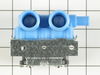
Weak cold water flow
First I thought hoses could have been clog, turned out that the flow valve was bad
One screw to take off the value holder itself, removed the two hoses that bring hot and cold water to the valve, removed the water line that brings the cold and hot water to the washer (nothing more than a hose clamp) Was then able to remove the valve holder. Simply unbolted the value from the holder, replaced with new valve and reversed processed to re-install.
Pretty easy, about minutes
One screw to take off the value holder itself, removed the two hoses that bring hot and cold water to the valve, removed the water line that brings the cold and hot water to the washer (nothing more than a hose clamp) Was then able to remove the valve holder. Simply unbolted the value from the holder, replaced with new valve and reversed processed to re-install.
Pretty easy, about minutes
Parts Used:
-
Nicholas from Parrish, FL
-
Difficulty Level:Easy
-
Total Repair Time:15 - 30 mins
-
Tools:Screw drivers, Wrench (Adjustable)
11 of 14 people
found this instruction helpful.
Was this instruction helpful to you?
Thank you for voting!
Wouldn't agitate or spin.
This was my fist time attempting to fix a washer. I had to guess on the length of the belt since the model number on the machine had worn off and the belt had snapped in a way that made determining the length difficult. At first, I ordered a belt that was too small. I realized this after I was unable to remount the motor stand onto the bottom of the machine. This model had the motor assembly right in front of the unit. It was easily accessed after removing the panel on the front of the machine. It was easy to remove the 4 screws (they were all visible) on the motor stand. After that I was able to disconnect the pump belt. This machine has seperate belts for agitation and the pump. The pump belt must be removed in order to install the agitator belt because they both are driven by the same shaft and the pump belt is positioned on the bottom. There is also a tension wheel for the agitator belt which might be easily overlooked. Make sure to install the agitator belt so that the tension wheel is on the outside of the belt's path. The whole job is fairly easy if you have the right part to begin with. If you have to force the belt onto the wheels, then you probably have a belt that is too small.
Parts Used:
-
Eric from Akron, OH
-
Difficulty Level:A Bit Difficult
-
Total Repair Time:15 - 30 mins
-
Tools:Nutdriver
9 of 9 people
found this instruction helpful.
Was this instruction helpful to you?
Thank you for voting!
The thin walled plastic drain line got a pin hole leak
The washer is four years old.
This is the second time I needed to replace this same drain hose on this same washer since I had the machine
There is only my wife ant myself maybe, 2 -3 medium size loads per week - why I would have two drain lines develop the same problem in almost the same location in two years is disconcerting
There must be a design problem with the clear plastic hose - Suggest Maytag go to a thick walled rubber hose
The hole is alway inside the washer on the bottom just after the hose bracket - I suspect that something rubbing causing a small pin hole to develop - when the condition first starts it is very difficult to located -There will be water under the washer
Run the washer and discharge the water - to locate
The replacement must be made through the lower front removable panel - and is easier to do if the pump return hose is also disconnected from the pump
Be very carful with the thin wall replacement hose - very light weight plastic - do not pull across the floor of washer - it could easily get damaged
Your company did a get job getting the part to me - The Fed Ex track system was great
I could tell exactly where the delivery was al all times -
This is the second time I needed to replace this same drain hose on this same washer since I had the machine
There is only my wife ant myself maybe, 2 -3 medium size loads per week - why I would have two drain lines develop the same problem in almost the same location in two years is disconcerting
There must be a design problem with the clear plastic hose - Suggest Maytag go to a thick walled rubber hose
The hole is alway inside the washer on the bottom just after the hose bracket - I suspect that something rubbing causing a small pin hole to develop - when the condition first starts it is very difficult to located -There will be water under the washer
Run the washer and discharge the water - to locate
The replacement must be made through the lower front removable panel - and is easier to do if the pump return hose is also disconnected from the pump
Be very carful with the thin wall replacement hose - very light weight plastic - do not pull across the floor of washer - it could easily get damaged
Your company did a get job getting the part to me - The Fed Ex track system was great
I could tell exactly where the delivery was al all times -
Parts Used:
-
WALTER from Holualoa, Hawaii, AL
-
Difficulty Level:Really Easy
-
Total Repair Time:15 - 30 mins
-
Tools:Pliers, Wrench set
9 of 10 people
found this instruction helpful.
Was this instruction helpful to you?
Thank you for voting!
Would not empty water
I suggest if you are replacing the pump, order the belt at the same time, you must remove the pump to replace the belt.
Parts Used:
-
James from Houma, LA
-
Difficulty Level:Really Easy
-
Total Repair Time:1- 2 hours
-
Tools:Nutdriver, Pliers, Screw drivers
8 of 9 people
found this instruction helpful.
Was this instruction helpful to you?
Thank you for voting!
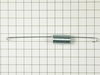
Washer would not stay in balance during spin cycle
I replaced the 7 springs holding the tub in place. To do this you have to take the two front bolts out the holds to front panel on the machine. Remove the front panel and you will see the bolt in each front corner holding the top in place. Remove these. Then remove the 8 bolts at the bottom of the three remaining sides of the machine. After removing these you can move the sides out of the way enough to remove each one of the 7 springs holding the tub in place. Then one by one replace the springs and put the sides back on in the order they were removed. Hopefully, if you are having trouble keeping your machine in balance in the spin cycle, this will fix your machine as it fixed ours.
Parts Used:
-
Darrell from Midwest City, OK
-
Difficulty Level:Easy
-
Total Repair Time:15 - 30 mins
-
Tools:Pliers, Screw drivers, Socket set
8 of 9 people
found this instruction helpful.
Was this instruction helpful to you?
Thank you for voting!